Whole wheat vs white unbleached vs bleached flour: what bakers should know
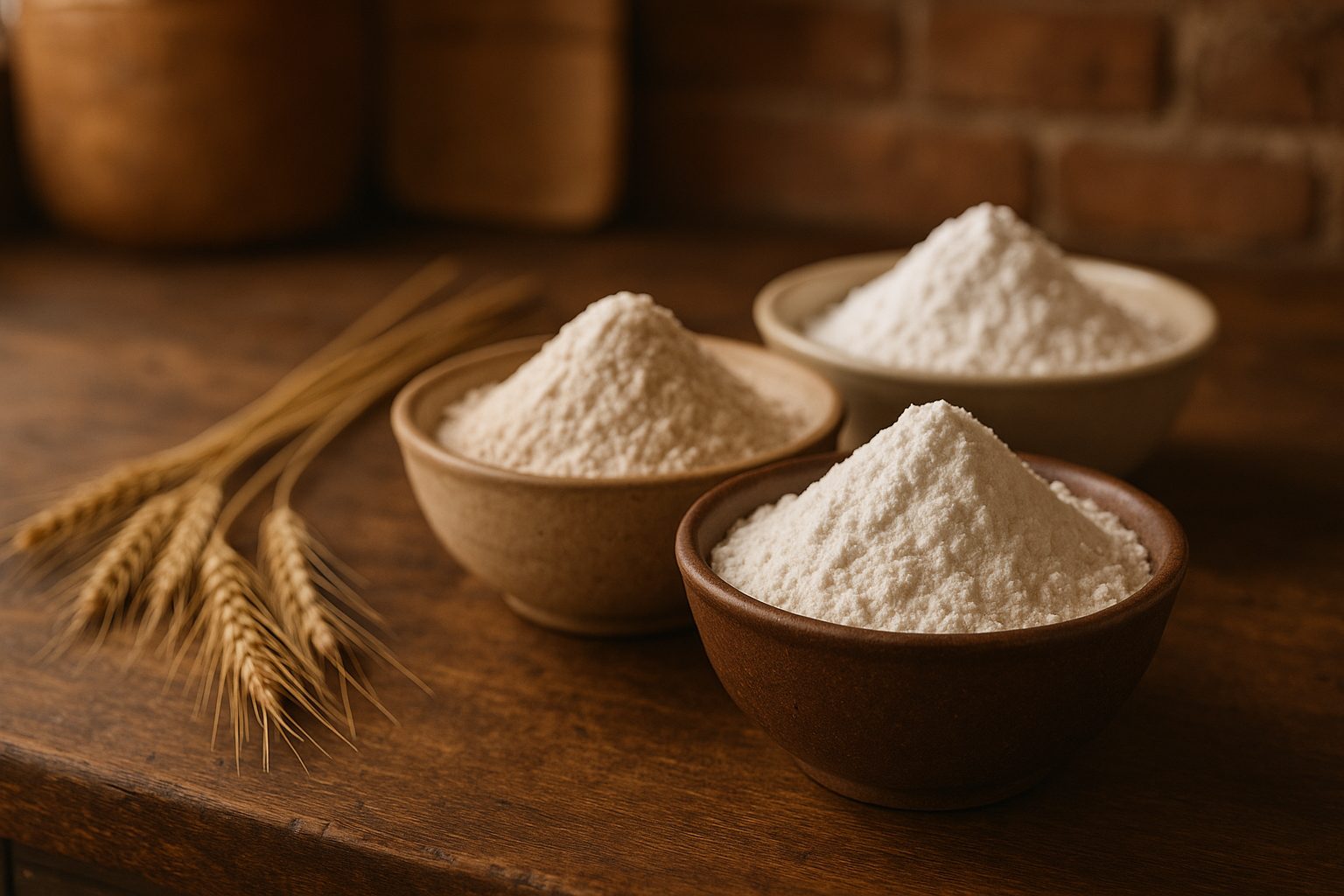
If you have ever stood in the flour aisle and wondered why one bag says whole wheat, another says unbleached, and another says bleached, you are not alone. The labels sound similar, but they bake very differently — especially in sourdough, where hydration, fermentation time, and gluten strength all matter.
Whole wheat flour includes the bran and germ from the wheat kernel, not just the starchy endosperm. That gives you more fiber, minerals, and a nuttier flavor. It also means more sharp bran pieces cutting through gluten strands, so whole wheat doughs often feel tighter and absorb more water. At Kat's Lil Kitchen we love whole wheat for depth of flavor, but we usually blend it with white flour or increase hydration and give the dough extra time to relax. A 100% whole wheat sourdough loaf can be delicious and hearty; it just needs patience and a slightly wetter dough than you might expect.
White unbleached flour is milled from the endosperm only, with no bran or germ. It is naturally off-white or creamy in color because wheat is not bright white to begin with. Unbleached flour ages over time (or is treated without chlorine), which lets proteins and enzymes develop in a way many bakers prefer for bread. It tends to give a strong, elastic gluten network and a clean wheat flavor — an excellent everyday choice for sandwich loaves, boules, and many pastries. This is our go-to for classic sourdough when we want an open crumb and a mild, buttery aroma.
Bleached white flour is also made from the endosperm, but it is treated with bleaching agents (such as chlorine or benzoyl peroxide) to whiten it quickly and change how it behaves. Bleaching softens the flour, lowers protein bonding in some cases, and produces a very pale color. That can be useful for tender cakes, cookies, and some quick breads where you want a fine, soft crumb rather than a chewy artisan loaf. For long-fermented sourdough, bleached flour is usually not ideal: the softer gluten can collapse under extended fermentation, and the flavor is milder and less complex than unbleached.
So which should you choose? For sourdough bread with structure and character, start with white unbleached bread flour or a mix of unbleached white and whole wheat. Reach for whole wheat when you want nutrition and a rustic, earthy loaf — and plan on extra hydration. Save bleached flour for cakes, muffins, and recipes that call for a delicate, tender crumb. In Costa Rica's humidity, any flour can feel different from what recipes written for drier climates assume, so trust your hands: if the dough feels stiff, add a splash of water; if it feels soupy, fold and rest before adding more flour.
At Kat's Lil Kitchen in Puriscal, we bake with what gives our customers the best texture and flavor for each product — often unbleached white for our signature sourdough, with whole wheat blends when the season and the menu call for something heartier. The best flour is the one matched to the bake, not the fanciest name on the bag.