Sourdough starter care in a tropical kitchen
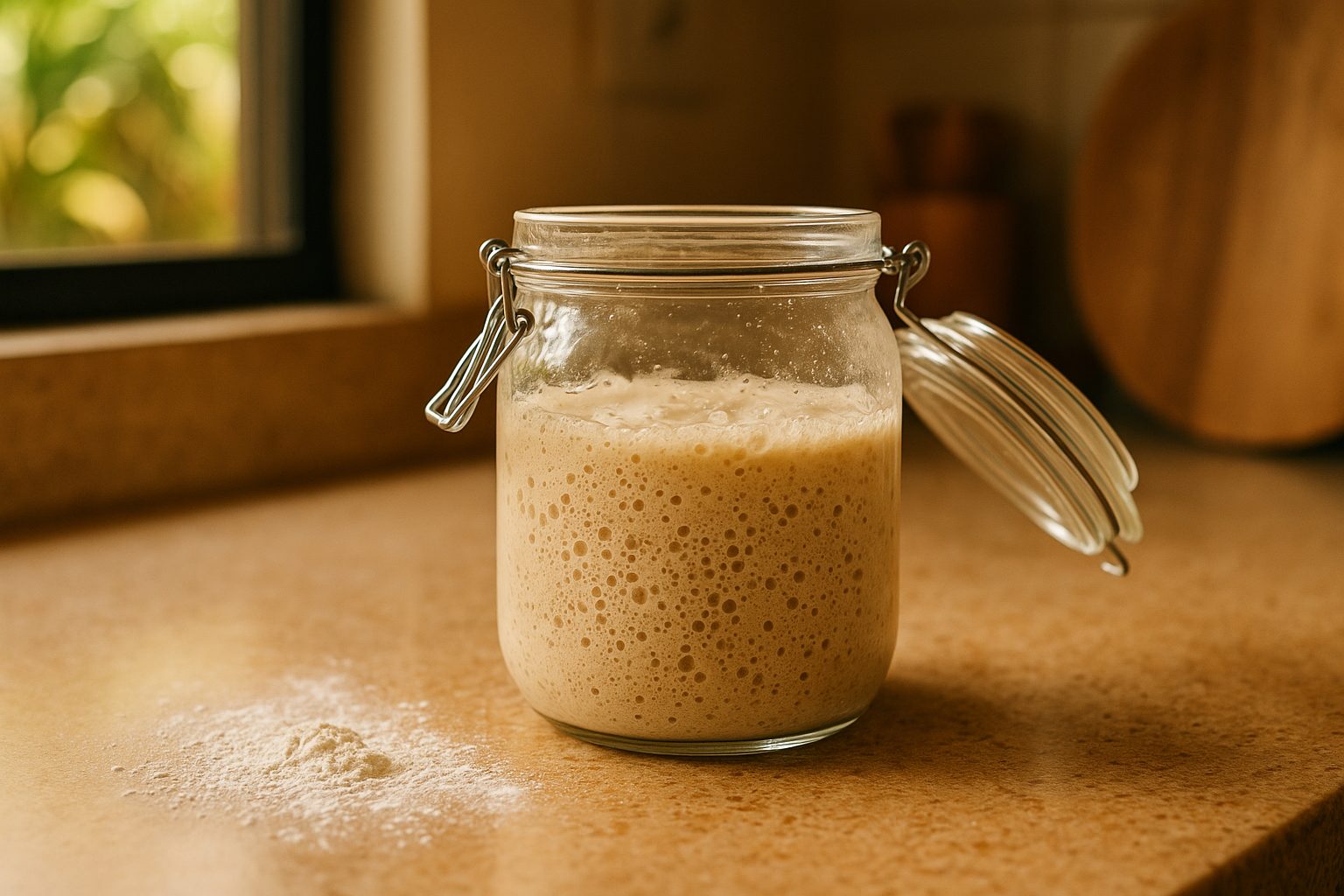
A sourdough starter is a living culture — flour, water, wild yeast, and bacteria sharing a jar. In temperate climates, starter care follows familiar recipes from books and videos. In a tropical kitchen around Puriscal, the same starter can double faster, smell sharper, or seem sluggish depending on the week. That is normal. You are not failing; the environment is louder here.
Temperature drives everything. Above roughly 26–28°C (80–82°F), starters often peak sooner and need feeding more frequently if kept on the counter. If your kitchen runs hot midday, consider a cooler spot (not direct sun), shorter peak windows, or moving to refrigerated maintenance between bakes.
Feeding ratio matters more in the tropics. A common maintenance feed is 1:1:1 by weight (starter : flour : water). In heat, some bakers use 1:2:2 or 1:5:5 to slow activity and reduce sour alcohol smell (hooch). Stir back hooch if it's a thin layer; pour some off if the smell is very strong and you want a milder culture.
Use water you would drink. Chlorine can slow a young starter; settled tap water or filtered water works for most home bakers. In humid weeks, dough and starter both absorb ambient moisture — slightly stiffer feeds can help if your starter turns runny.
Counter vs fridge: If you bake once or twice a week, counter feeding the day before baking may be enough. If you bake occasionally, refrigerate after a fresh feed once the starter peaks, then revive with two room-temperature feeds before baking day. Vacation plan: feed, let peak briefly, refrigerate. For long absences, dry starter flakes or a thick paste in the fridge is an backup many CR bakers wish they had tried earlier.
Signs of health: bubbles, domed rise after feeding, pleasant tangy smell, predictable doubling time. Signs to adjust: pink/orange streak (discard and restart from clean jar), mold on surface, or no activity after 48 hours at warm room temp — feed again with fresh flour, check water, and give it one more day before restarting from scratch.
Starter care connects directly to the bread we sell at Kat's Lil Kitchen: long fermentation, local flour behavior, and patience. You do not need perfection — you need a rhythm that matches your kitchen. Start simple, watch the jar, and let the tropics teach you what the textbooks assumed.