Sourdough vs commercial yeast: benefits for flavor, digestion, and everyday baking
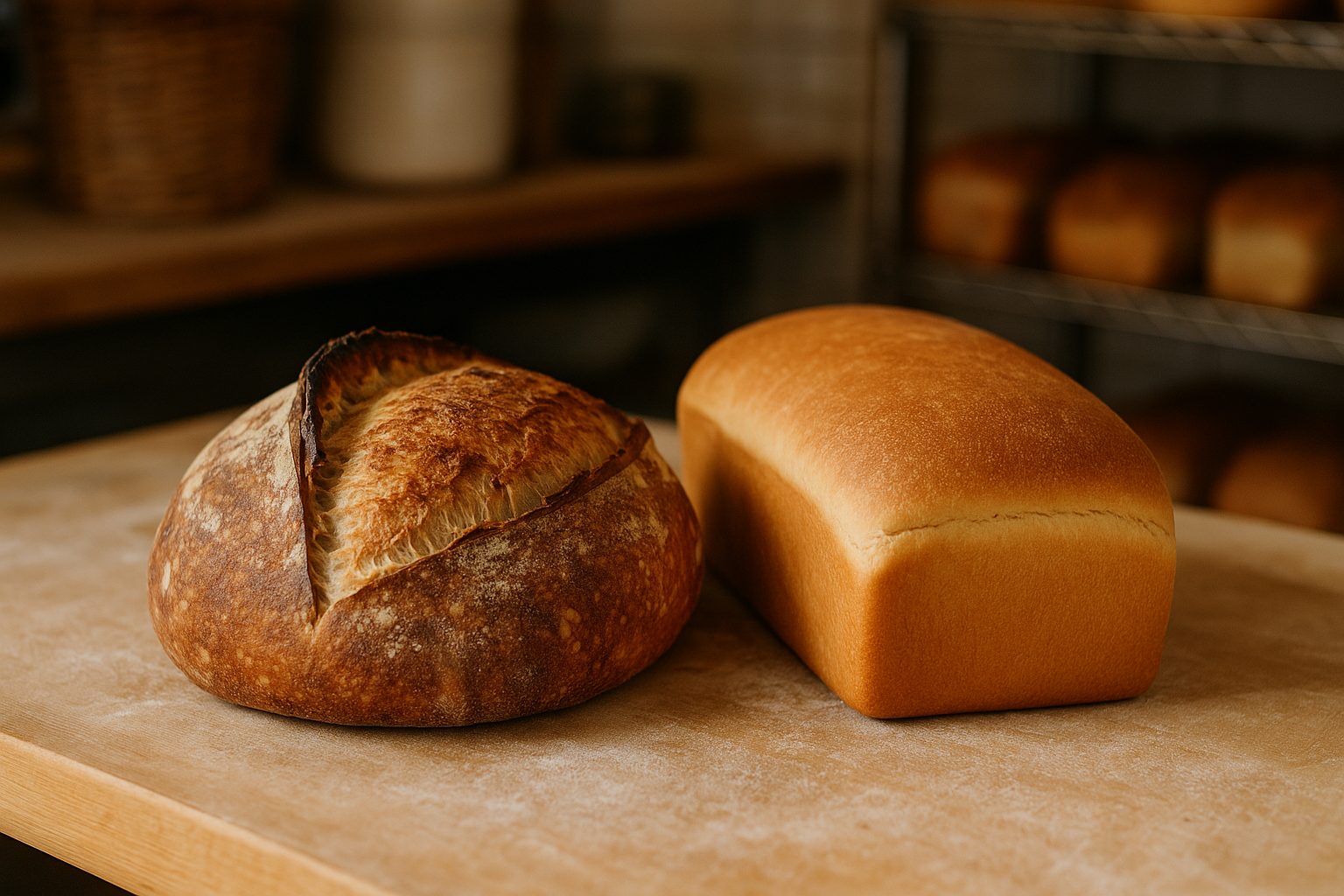
Walk into almost any bakery and you will see two worlds: quick-risen loaves made with commercial yeast, and slow breads built from sourdough starter. Both can taste good. But they are not the same process, and the differences show up in flavor, texture, shelf life, and how your body handles the bread.
Commercial yeast (usually Saccharomyces cerevisiae) is a single strain bred to ferment fast and predictably. You add a measured amount, knead, proof for an hour or two, and bake. That speed is a real advantage when you need bread today or when you are learning basic dough handling. Yeast breads can be soft, light, and consistent — perfect for dinner rolls, quick sandwich loaves, and many enriched doughs with butter and sugar.
Sourdough is a culture of wild yeast and lactic acid bacteria living together in starter — flour and water fed over days and weeks. Fermentation is slower because the ecosystem works at its own pace. That extra time is where much of the magic happens. Enzymes break down starches. Organic acids develop. Gluten gets reorganized through time as much as through kneading. The result is often a deeper, tangier flavor and a chewier crumb with a crackly crust.
One reason many people seek out sourdough is digestibility. Long fermentation does not magically remove gluten, but it can change the bread. Bacteria and enzymes partially break down proteins and phytic acid (which can bind minerals). Some people who feel heavy or bloated after fast commercial bread report tolerating well-fermented sourdough better — though celiac disease and serious wheat allergies still require strict avoidance. Think of sourdough as gentler for some stomachs, not a medical cure.
Shelf life is another practical benefit. The acids in sourdough act as natural preservatives. A well-made sourdough loaf often stays moist and resists mold longer than a same-day yeast loaf with no preservatives — especially important in humid places like Puriscal, where bread on the counter can turn quickly. That does not mean it lasts forever, but you may get an extra day or two of good eating.
Flavor is the reason we built Kat's Lil Kitchen around sourdough. Fast yeast bread can taste fine — neutral, soft, inoffensive. Slow sourdough tastes like something: wheat, fermentation, a little tang, a little sweetness that appears only after long proofing. Every starter has character shaped by local flour, water, and air. Our customers notice the difference in the first bite.
When does commercial yeast still make sense? When time is short, when you want a very mild flavor, or when a recipe depends on rapid rise (some cinnamon rolls, babka, or soft burger buns). Many professional bakeries use both tools. Sourdough for signature bread; yeast for speed and specific textures.
If you are baking at home, you do not have to choose one forever. Keep a starter for weekend loaves and keep yeast in the pantry for busy weekdays. If you are buying bread, look for real fermentation — not just sour flavor added at the end. Ingredients should be simple: flour, water, salt, and time.
At Kat's Lil Kitchen we ferment slow because the bread tastes better, keeps better, and reflects the care we put into every loaf. Yeast has its place in the baking world. For the bread we are proud to put our name on in Puriscal, sourdough is worth the wait.